
CASE STUDIES · ENGINEERING EVIDENCE
Cold Forming Engineering Case Studies
Published engineering cases organized by part, material, process issue and validation route.
Published cases
Material decisions from real problems
The case library lists published engineering articles. Final material selection is confirmed by drawings, standards, sample validation and written agreement.
RX-CE-021Case
With the same material, why does cold heading performance differ when using a different machine?
Engineer's Classroom · Chapter 9 | Material Suitability and Actual Processing Conditions In the previous chapter, we discussed how p...
Read case ->
RX-CE-020Case
The same material, why does it become difficult to upset when switched to another product?
Chapter 8: Product Structure and Forming Operations Chapter 8 Homepage Image A common situation often occurs at cold heading sites...
Read case ->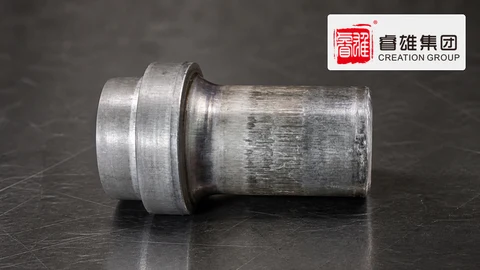
RX-CE-019Case
Phosphating appears normal, so why does it still fail during cold heading?
Chapter 7: A qualified coating does not necessarily mean effective lubrication after deformation. At cold heading sites, the followi...
Read case ->
RX-CE-017Case
The same wire, why does some become easy to upset after drawing while others do not?
Chapter 6: The wire has been drawn thinner, and the material's properties have also changed. At cold heading sites, one situation is...
Read case ->
RX-CE-015Case
Where do surface defects come from? Why are they carried all the way to the cold-headed finished product?
From continuous casting billets, wire rod rolling, transportation and transfer, pickling and remaking, to wire drawing and cold head...
Read case ->
RX-CE-014Case
Chapter 4: Spheroidization Rate Is Qualified, But Why Are Some Materials Still Difficult to Upset?
The purpose of spheroidizing annealing is to improve the cold-forming capability of medium-carbon steels and alloy steels. However...
Read case ->
RX-CE-013Case
Why do only a few products crack in the same batch of materials?
Chapter 3: Average Qualification Does Not Mean There Are No Local Risks At the cold heading site, one type of anomaly that is often...
Read case ->RX-CE-012Case
Why do problems still occur in cold heading even when the material is qualified? Chapter 2: What exactly do material standards control? Why can't standards replace process validation?
In the previous chapter, we discussed a core point: meeting material standards does not necessarily mean that cold heading productio...
Read case ->
RX-CE-011Case
Why Problems Still Occur in Cold Heading Even When the Material Meets Standards – Chapter 1: Standard Compliance Does Not Equal Cold Heading Stability
"Why do problems still occur in cold heading even when the material is qualified?" The material is "qualified," so why are there sti...
Read case ->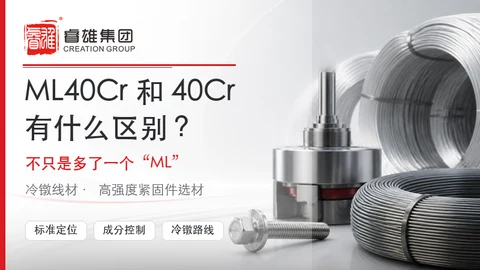
RX-CE-009Case1 related products
What is the difference between ML40Cr and 40Cr? It's not just that there's an extra "ML".
In the selection of cold-heading wire and high-strength fasteners, 40Cr is a very common grade. Many customers, upon seeing ML40Cr...
Read case ->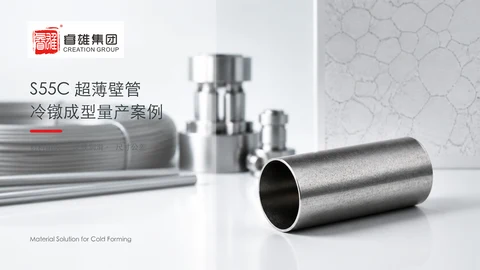
RX-CE-007Case
Case Study of Mass Production of S55C Ultra-Thin-Walled Tubes via Cold Forging for a Leading Global Automotive Components Customer: How Material Stability Determines Tool Life
Taking the ultra-thin-walled cold-formed tube S55C for a leading international automotive parts customer as an example, this analysi...
Read case ->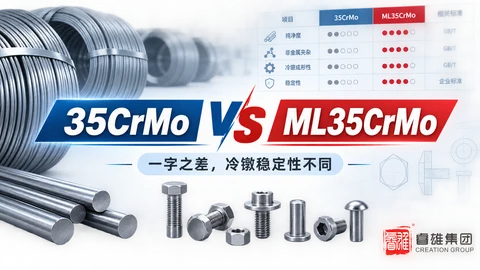
RX-CE-008Case1 related products
What is the difference between 35CrMo and ML35CrMo? We will explain everything clearly, from standards and composition to cold heading suitability.
35CrMo and ML35CrMo have similar compositions, but differ in standard specifications, chemical composition control, and suitability...
Read case ->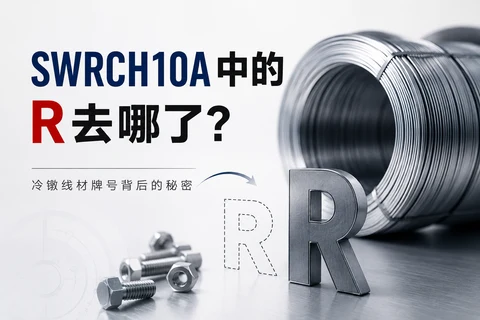
RX-CE-003Case5 related products
Why does SWRCH10A become SWCH10A? Where did that R go?
This article explains the difference between SWRCH10A and SWCH10A in a simple way: "R" stands for Wire Rod, and after processing int...
Read case ->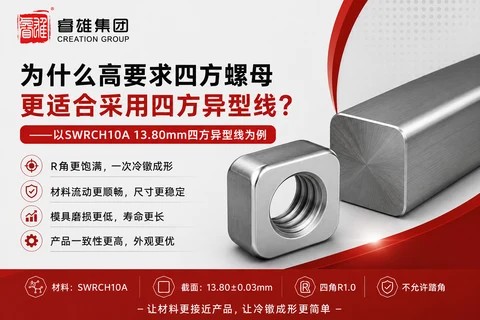
RX-CE-006Case12 related products
Why are high-demand square nuts more suitable for cold heading with square-shaped wire?
This article takes the cold heading of square nuts as an example to illustrate why high-demand special-shaped parts are more suitabl...
Read case ->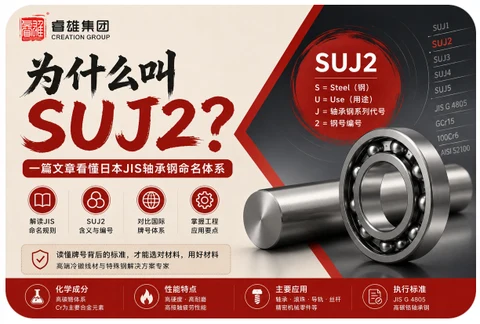
RX-CE-002Case4 related products
Why is it called SUJ2? Understand the Japanese JIS Steel Naming System in One Article
SUJ2 is not a randomly combined material code; rather, it is a bearing steel grade within Japan's JIS steel designation system. This...
Read case ->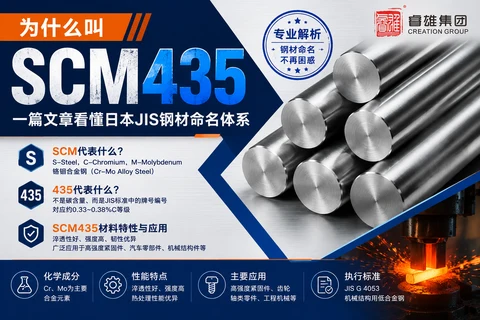
RX-CE-001Case19 related products
Why is it called SCM435? — Understand the Japanese JIS Steel Naming System in One Article
This article analyzes the naming logic of SCM435 based on the Japanese JIS G 4053 standard: "S" stands for Steel, "C" for Chromium...
Read case ->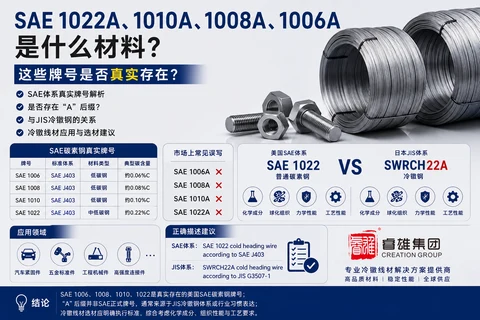
RX-CE-005Case3 related products
What materials are SAE 1022A, 1010A, 1008A, and 1006A? Do these grades actually exist?
This article analyzes the commercial designations such as 1022A, 1010A, 1008A, and 1006A within the SAE/JIS standard systems, clarif...
Read case ->