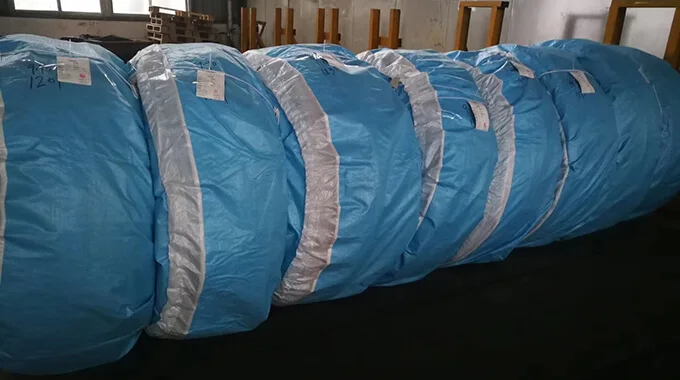
Technical data for 34CrNiMo6 cold-drawn steel wire, compliant with EN 10263-4. View the chemical composition, mechanical properties, and related technical requirements for this grade.
Table 1 Combinations of delivery conditions, product shapes, and conformity requirements
Table 2 Surface quality in delivery condition
Oberflächenbeschaffenheit im Lieferzustand
Symbol
Bar
Rolled wire
Wire
Falls nicht anders vereinbart
hot-rolled
none or +AR
X
X
-
Besonderer Oberflachenzustand,der nach Vereinbarung geliefert wird
cold-drawn
+C
-
-
X
after-drawn
+LC
X
-
X
rolled peeled
+PE
X
X
X
2. Chemical composition
Table 3 Chemical composition of non-boron steel grades, cast analysis, mass fraction (%)
Steel grade
C b
Si max.a
Mn
P max
S
Cr
Mo
CNi max.
Cu Max.
Abbreviated name
Material number
34CrNiMo6 / 41NiCrMo7-3-2
1.6582 1.6563
0.30 to 0.38 / 0.38 to 0.44
0,30 0,30
0.50 to 0.80 / 0.60 to 0.90
0,025 0,025
0.025 max. / 0.025 max.
1.30 to 1.70 / 0.70 to 0.90
0.15 to 0.30 / 0.15 to 0.30
1.30 to 1.70 / 1.65 to 2.00
0,25 0,25
NOTE 1 Elements not listed in this table should not be intentionally added to the steel, except for final refining of the melt, without the purchaser’s approval. All precautions must be taken to prevent the introduction of such elements from scrap and other materials used in production that could impair hardenability, mechanical properties, and serviceability. NOTE 2 For steels with hardenability requirements [see Tables 9 to 11], smaller deviations from the specified limits are permissible (with the exception of sulfur and phosphorus), provided that, for carbon, they do not exceed 01 %, and for the other elements, they do not surpass the values given in Table 5. NOTE 3 To enhance the efficiency of cold heading, it is possible to add 0.020 % up to 0.050 % of aluminum.
Table 4 Chemical composition of boron-alloyed steels. Cast analysis, mass fraction %
Table 5 Permissible deviations between product analysis and the cast analysis limits specified in Tables 3 and 4
3. Mechanical properties
Table 7 - Mechanical properties of boron-free alloy steels
Steel grade
Diameter
Delivery condition
+AC or +AC+PE
+AC+C+AC
+AC+C+AC+LC
Abbreviated name
Material number
Over mm
bis mm
Rm max MPa
Z min %
Rm max MPa
Z min %
Rm max MPa
Z min %
34CrNiMo6
1.6582
2
5
710
60
750
58
5
40
720
58
700
60
740
58
4. Hardenability requirements
Table 9 - Hardness limits for boron-free steel grades with (normal) hardenability requirements (H grade; see 6.4.1)
Steel short name
rte Material number
symbol
Austenitizing temperature C+5°℃
Range limit
Hardness in HRC Distance from the quenched end face in mm
1
2
3
4
5
6
7
8
9
10
11
13
15
20
25
30
34CrNiMo6
1.6582
+H
850
max.
58
58
58
58
57
57
57
57
57
57
57
57
57
57
57
min.
50
50
50
50
49
48
48
48
48
47
47
47 46
45
44
min.
54
54
54
54
54
54
54
54
53
52
52
50
Table 10 - Hardness limits for boron-free steel grades with narrow hardenability requirements (HH and HL grades; see 6.4.2)
Table 12 Maximum diameter to achieve at least 90% martensite in core hardness testing (+ CH variety)
Steel grade
Symbol
austenitizing temperature in the core hardness test °C ± 5℃
maximum diameter to ensure 90% martensite in the core [mm]
Abbreviated name
Material number
34CrNiMo6 / 41NiCrMo 7-3-2
1.6582 1.6563
+CH +CH
850 850
46 50
31 34
Boron-alloyed steels
a As a guideline, an austenitizing time of at least 30 minutes is recommended. b The specified maximum diameters are those achievable with the lowest hardenability for the respective steel grade, given the minimum carbon content. When using +HH steel grades, the maximum diameter may be increased
TECHNICAL NOTE
Application and ordering note
Chemical composition, mechanical properties, tolerances and delivery condition must be confirmed against the applicable standard edition, customer drawing and order specification.
RFQ CHECKLIST
What to include in the enquiry
Grade and applicable standard
Diameter or section, delivery condition and quantity
Drawing, forming route or failure photos when available