
International Leading Automotive Parts Customer Success Story | S55C Ultra-Thin-Walled Cold-Formed Tube
From Prototype Risks to Mass Production Window: Creation Group Supports Cold Forging of S55C Ultra-Thin-Walled Tubes
For a cold-formed tube project with a length of approximately 14.5 mm, an outer diameter of about 10.5 mm, and sensitive thin-walled ends, Creation Group has assisted the customer in establishing reproducible mass production material conditions by focusing on material microstructure, hardness window, surface film, decarburization, and grain boundary oxidation control.
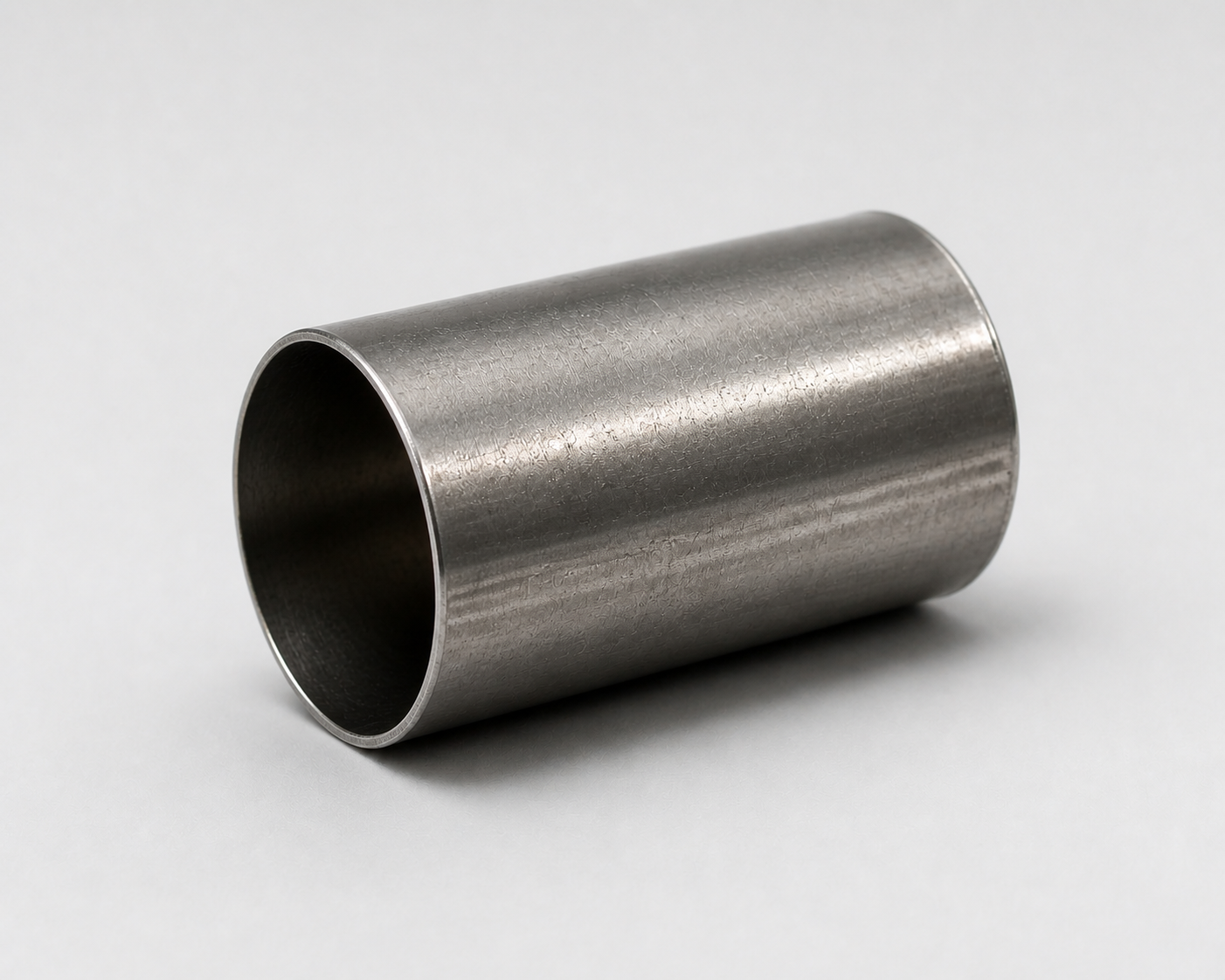
Material: S55C Medium-Carbon Steel
Process: Cold Forging / Cold Extrusion / Shaping
Focus: Stability of Thin-Walled Ends
Role: Supplier of Cold-Formed Wire Solutions
Figure 1: A realistic rendering of the ultra-thin-walled tube, created based on actual photographs and 3D dimension drawings, used for public case presentation.
Project Background: What Seems Like a Simple Short Tube Is Actually Challenging to Stably Mass-Produce
This project comes from a leading international automotive component customer. The product is a short, thin-walled tube with thin ends, short length, and tight dimensional tolerances. The customer’s concern goes beyond whether a sample can be produced; they are focused on maintaining consistent end-face condition, outer diameter, inner bore, roundness, visual wall thickness uniformity, and stable tool life during continuous production.
S55C is a medium-carbon steel with good base strength, but its cold-forming window is narrower than that of low-carbon cold-heading steels. If there are fluctuations in microstructure, hardness, surface condition, or lubrication film, the thin-walled ends are prone to issues such as tearing, wrinkling, scoring, uneven wall thickness, ovality of the inner bore, and abnormal die wear.
Length L14.5mm
Tube Outer DiameterApproximately φ10.5
Visual Wall ThicknessApproximately 0.45
Customer TypeLeading International Automotive Component Supplier
Public version note: This document presents a de-identified, case-study-style description. Specific customer names, actual batch data, and test report values can be replaced with official documentation as needed.
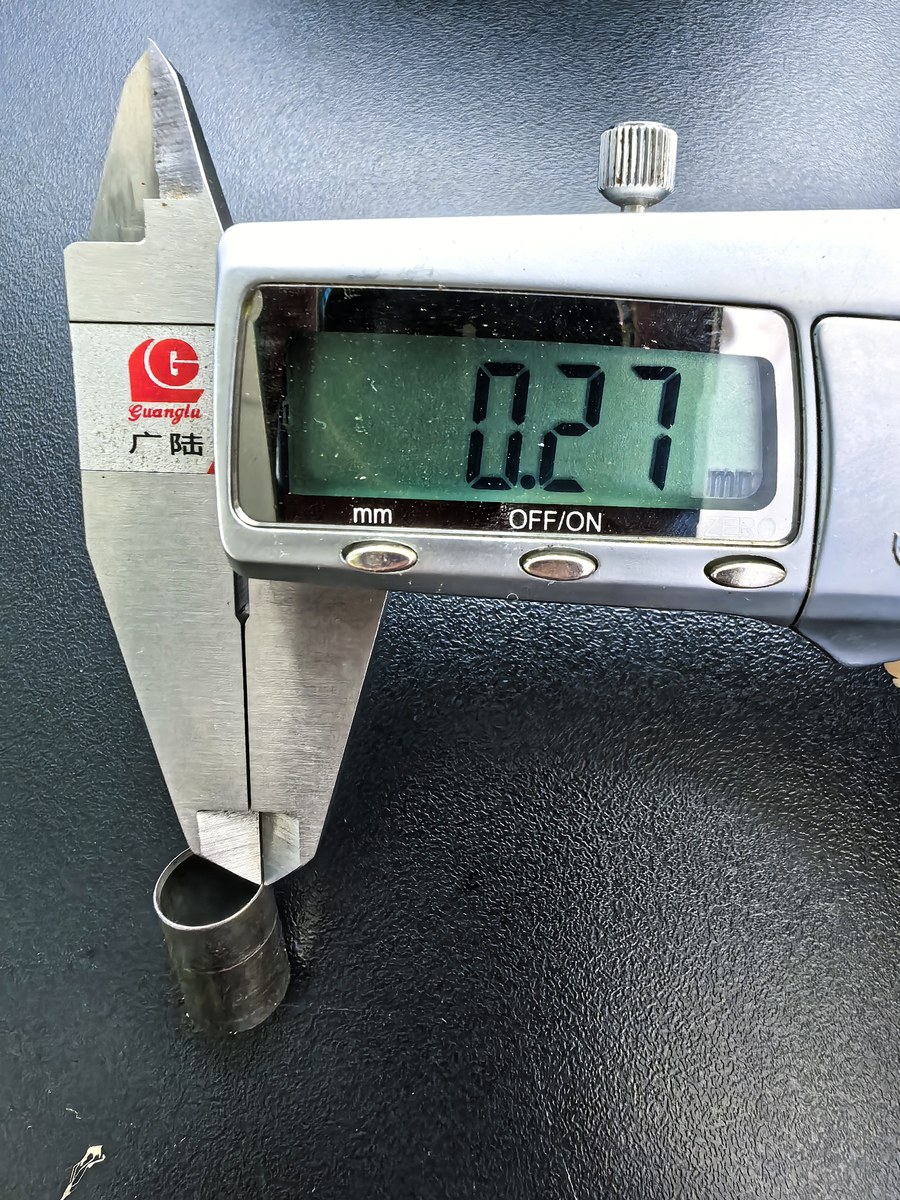
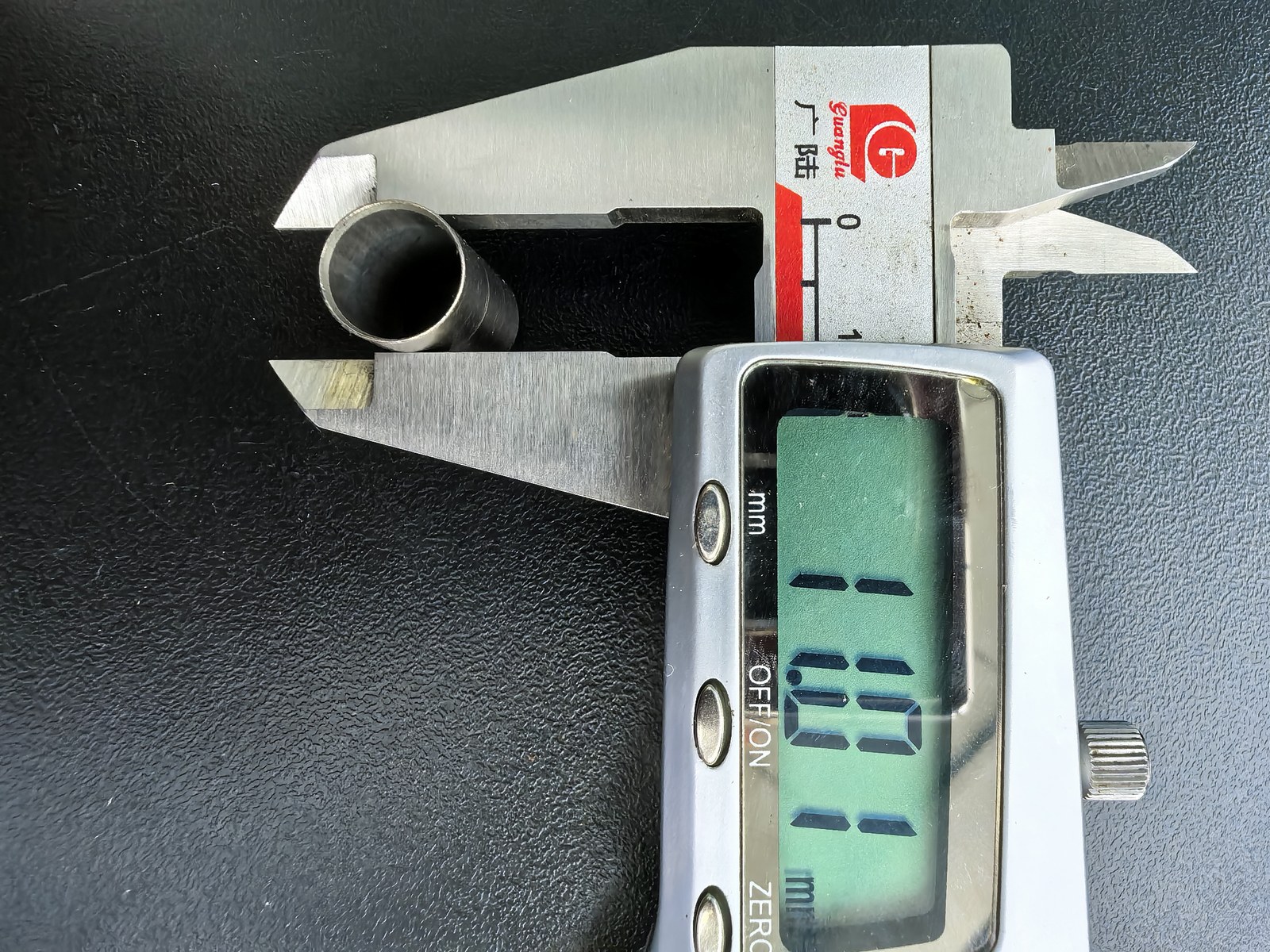
Physical Reference: Length Measurement and Appearance of the Thin-Walled End Portion.
Physical Reference: The thin-wall condition at the port is highly sensitive to both material properties and tooling conditions.
Breaking Down the Challenges: Ultra-Thin-Walled Cold Forming Is Not a Single-Point Issue
The failure of mass production for ultra-thin-walled tubes is rarely caused by just one factor; rather, it results from the combined effects of materials, lubrication films, tooling, equipment, and inspection feedback loops. Early in the project, Creation Group categorized risks into six types and developed material-side control plans for each item.
Organizational Risks
Non-Uniform Microstructure Leading to Flow Variations
Inadequate spheroidization, localized banded pearlite distribution, or coarse carbides can cause inconsistent deformation resistance in thin-walled regions under high strain, resulting in uneven wall thickness or micro-cracks.
Hardness Risks
Too Narrow Hardness Window
Excessive hardness can lead to cracking and tool damage, while insufficient hardness causes uncontrolled material flow, often resulting in collapsed edges, wrinkling, or dimensional drift at the tube ends.
Surface Layer Risks
Decarburization and Grain Boundary Oxidation Exacerbate Crack Nuclei
The thin-walled end section essentially acts as a magnifying glass for surface quality—decarburization, grain boundary oxidation, and residual oxide scale can all become initiation points for cracks and surface scratches.
Lubrication Risks
Film Continuity Determines Tool Life
Insufficient adhesion, ductility, and lubricity of the lubrication film can lead to film breakdown, die sticking, surface scratches, and localized overheating, making tool life unpredictable.
Dimensional Risks
Thin-Walled Structures Are Highly Sensitive to Variations
Wire diameter, ovality, hardness, die clearance, and punch stiffness all directly affect the outer diameter, inner bore, wall thickness, visual appearance, and end-face perpendicularity.
Mass Production Risks
Sample Success Does Not Guarantee Batch Stability
Without consistent material batch quality and process traceability, even occasional successes during trial tooling can quickly turn into frequent tool adjustments, machine downtime, and rework in full-scale production.
Material Organization: S55C—Making “Strength” Serve Cold Forming
Creation Group does not simply supply material by grade; instead, it manages S55C specifically as a cold-forming material. For ultra-thin-walled tubes, the material must strike a balance among strength, ductility, and surface integrity, with particular emphasis on controlling microstructural uniformity after spheroidizing annealing and minimizing batch-to-batch hardness variations.
| Control Item | Influence on Ultra-Thin-Walled Tubes | Creation Group’s Approach |
|---|---|---|
| Spheroidized Microstructure | Determines cold-extrusion performance and thin-wall drawing capability | Pays close attention to carbide spheroidization, distribution uniformity, and the risk of banded structures |
| Hardness Tolerance Range | Affects cracking, wrinkling, dimensional springback, and die loads | Narrows batch-to-batch hardness fluctuations based on customer forming feedback, rather than merely meeting broad standards |
| Decarburization Control | Weakened surface strength at thin-walled end faces can trigger cracking | |
| Grain Boundary Oxidation |
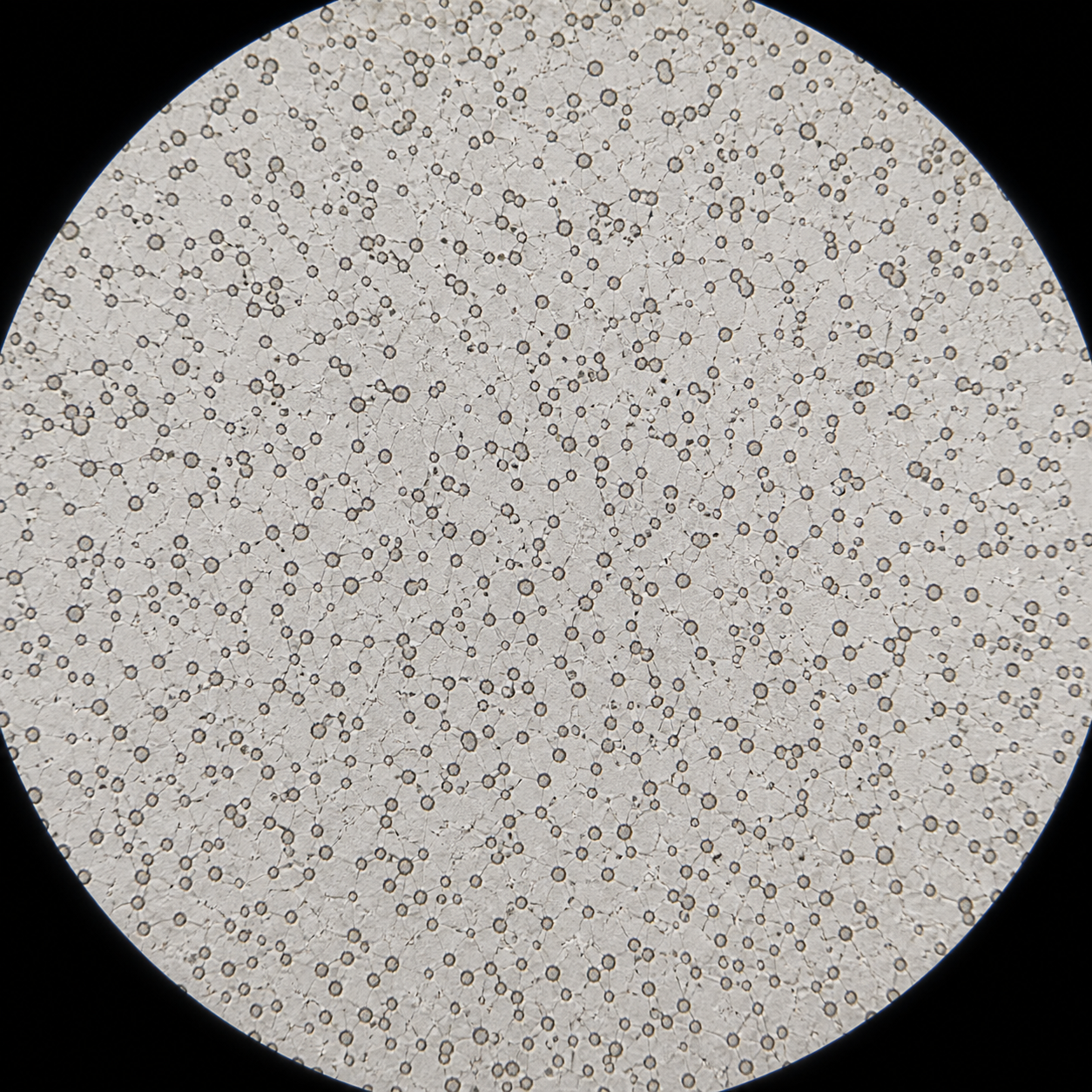
Figure 2: Schematic illustration of the spheroidized annealed microstructure of S55C. Used to demonstrate the role of a uniformly spheroidized microstructure in enhancing cold-forming flowability; not an original image from a customer’s inspection report.
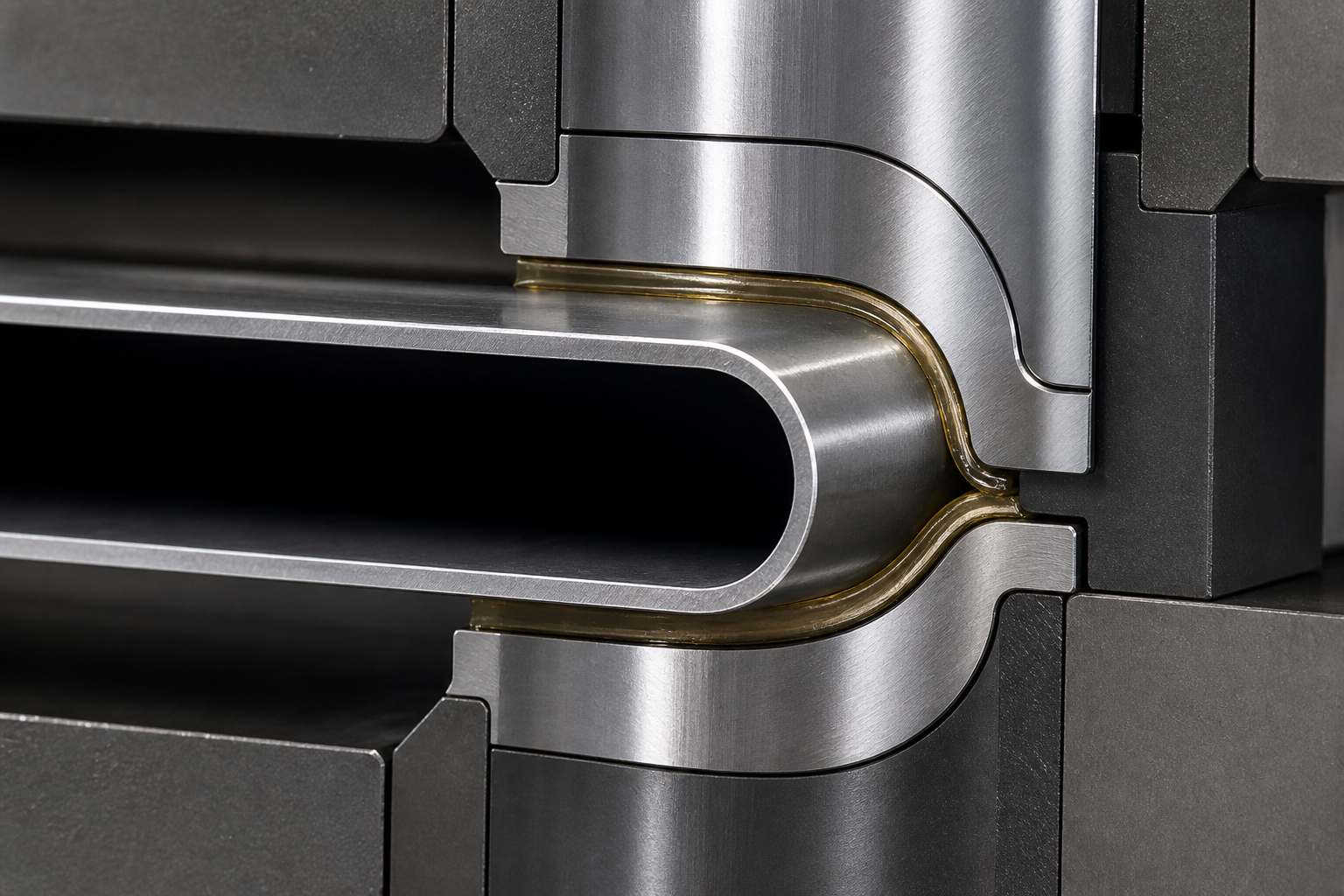
Figure 3: Schematic view of the contact zone during ultra-thin-walled tube forming. Membrane continuity, bonding strength, and ductility directly affect galling and tool life.
Surface Film Lubrication: It’s Not Enough to Just Have a Film; It Must Withstand Thin-Walled Large Deformations
In thin-walled cold forming, contact pressures between the material and the punch, die, and finishing tools are high. Even slight fluctuations in friction conditions can lead to port scoring, internal wall scratches, localized heating, die sticking, and premature tool wear.
Creation Group focuses on three core capabilities of the surface film from the material supply end: lubricity, ductility, and adhesion. The film must continuously cover the material surface throughout the forming process, flowing with the material without rupturing prematurely, while also avoiding excessive thickness that could cause buildup, dimensional variations, or die contamination.
Lubricity
Reduces frictional heat and the risk of tearing under high contact pressure, improving the contact condition between the punch and the thin-walled inner bore.
Ductility
Maintains film continuity during large material deformations, preventing premature rupture of the film at the thin-walled end face or within the inner bore area.
Adhesion
Prevents film delamination, accumulation, or localized failure, helping customers achieve more predictable tool life.
Mass Production Introduction: Creation Group Moves Material Risks Forward to Before Trial Molding
Leading international automotive component customers have stringent requirements for mass production approval and process stability. Instead of passively analyzing issues only after product abnormalities arise, Creation Group works with its customers to advance along the path of “material confirmation – small-batch trial production – dimensional feedback – batch locking – mass production tracking.”
1
Confirmation of Drawing and Physical Features
Identify key risk points such as thin-walled ports, length, outer diameter, inner bore, and end-face perpendicularity.
2
Setting the S55C Material Window
Establish supply requirements centered on spheroidal graphite structure, hardness, decarburization, surface quality, and coating condition.
3
Feedback Loop During Trial Production
Based on feedback regarding port cracking, scratches, wall thickness visual inspection, and mold wear, adjust priorities in material and coating control.
4
Batch Consistency Management
Stabilize the hardness range, surface condition, and wire rod dimension variations to reduce the frequency with which customers need to adjust mold parameters.
5
Mass Production Supply Tracking
Establish an anomaly traceability and improvement mechanism to make mold life, dimensional stability, and delivery rhythm more controllable.
Dimensions and Tooling: Thin-Walled Products Cannot Be “Screened Out” by End-Inspection
The outer diameter, inner bore, end-face perpendicularity, roundness, and surface appearance of ultra-thin-walled tubes are all highly dependent on the material’s flow behavior. If the material’s hardness, coating, or wire diameter fluctuates significantly, even a properly designed tool will experience dimensional drift and variations in tool life.
The value Creation Group provides is to keep material variations within a range that the customer’s tool can accommodate. This allows customers to more easily establish stable process windows for die design, punch clearance, forming amounts, and lubrication parameters, thereby reducing tool adjustment frequency and downtime risks.
| Customer Site Performance | Possible Material Factors Involved | Creation Group Support Direction |
|---|---|---|
| Occasional cracking at the port | Excessively high hardness, insufficient spheroidization, abnormal decarburization/oxidation at the surface layer | Re-evaluate microstructure, hardness, and surface quality; adjust annealing processes and batch selection |
| Scratches or sticking in the inner bore | Inadequate coating lubrication, poor adhesion, fluctuating surface roughness | Optimize coating continuity and lubrication compatibility to minimize high-pressure contact failures |
| Inconsistent wall thickness visually | Wire diameter ovality, hardness fluctuations, uneven material flow | Narrow wire size and hardness variations; strengthen batch consistency |
| Unpredictable tool life | Material batch-to-batch variation, degradation of the lubricating film, localized load increases |
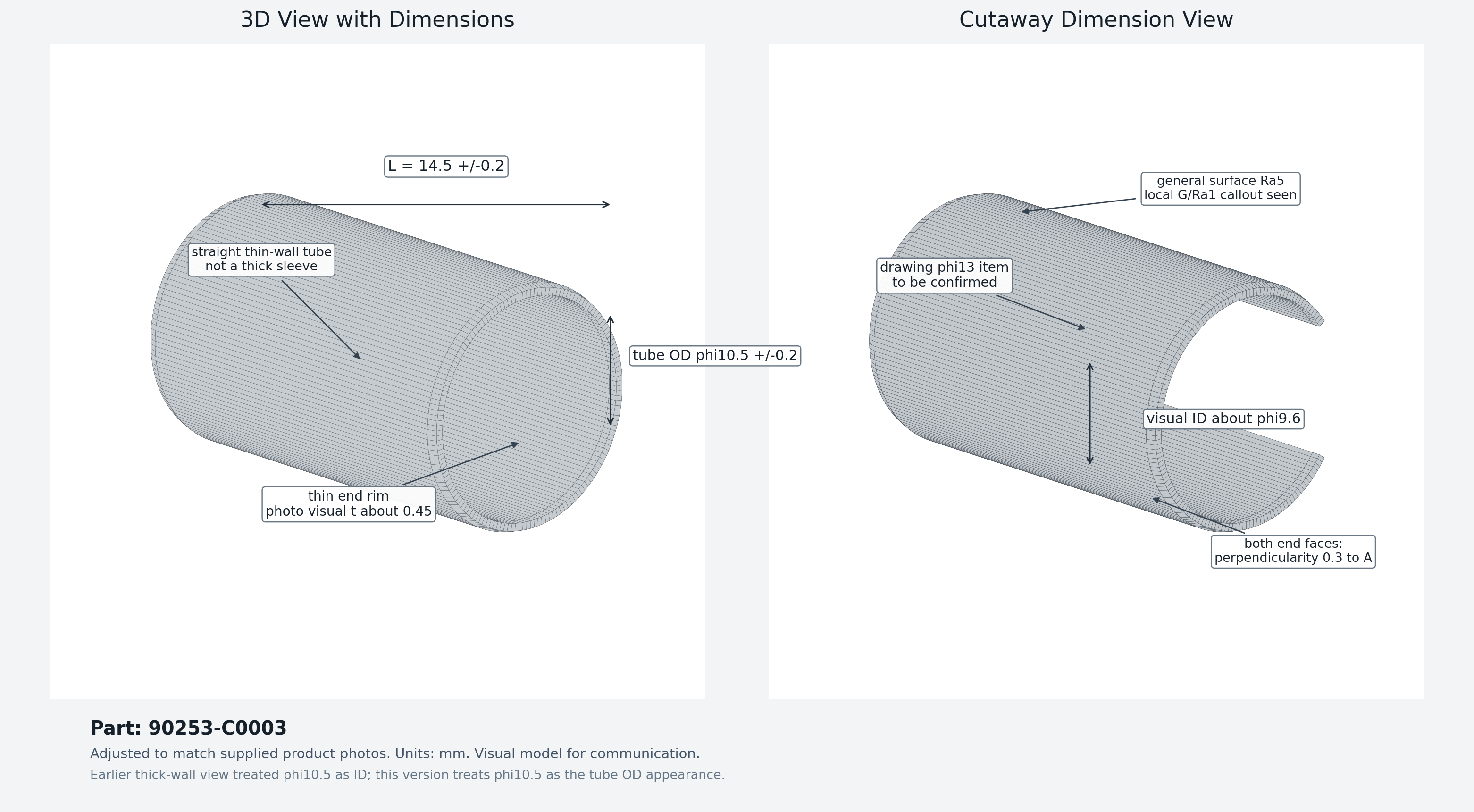
Figure 4: A three-dimensional dimension diagram corrected based on the drawing and the actual part appearance. Used to illustrate key dimensions and potential risk points at the thin-walled port.
The Role of Creation Group: Not Just Supplying Wire, but Helping Customers Achieve Mass Production
In this project for a leading international automotive component customer, Creation Group participates as a materials supplier in the customer’s mass-production introduction phase, linking material control with on-site forming results. We focus not only on grade and price, but also on whether the customer can achieve stable production, maintain controllable mold life, and ensure consistent batch deliveries.
Expert Material Selection
Selecting the Material Window Based on Forming Difficulty
Based on the cold-forming characteristics of S55C, we assist the customer in identifying control limits for hardness, microstructure, and surface quality.
Process Collaboration
Responding to On-Site Issues with Material Data
We trace back on-site phenomena such as edge cracking, scratches, and die wear to their root causes in material properties and coating controls.
Stable Supply
Helping Customers Avoid Pitfalls in Mass Production
Through batch consistency, traceability, and continuous improvement, we help customers reduce risks associated with die repairs, downtime, and rework.
Conclusion: The Thinner the Wall, the Greater the Professional Value of a Materials Supplier
Ultra-thin-walled cold-formed tubes are not merely short tubular components; they result from the combined effects of materials, tooling, lubrication, equipment, and inspection. For leading international automotive component customers, what truly matters is stable, traceable, and continuously improvable mass-production capability.
Creation Group is committed to standing from the perspective of the customer’s production floor, addressing material risks proactively and transforming material stability into extended mold life, dimensional consistency, and delivery reliability for our customers. For demanding cold-heading wire, special-section wire, and precision cold-forming projects, Creation Group provides not just materials, but comprehensive system solutions geared toward successful mass production.
The metallographic images and die-contact areas shown in this article are technical illustrations; actual photographs and 3D renderings are used solely for public case presentations. Formal quality approval shall be based on customer drawings, test reports, and mutually confirmed documentation.